
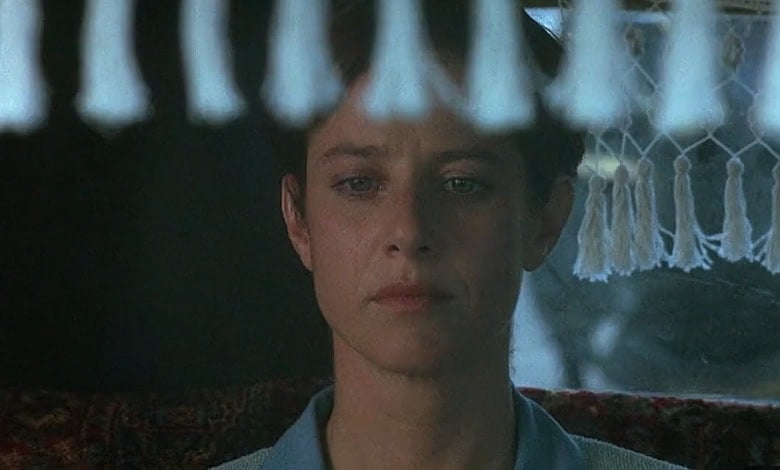
Bernardo Bertolucci’s “The Sheltering Sky” (1990) is set in North Africa of 1947 and filmed in the Sahara Desert, Morocco and Algeria.
It’s based on Paul Bowles’ 1949 novel and plays like a depressed David Lean epic.
When we meet Kit and Porter, played by Debra Winger and John Malkovich, they’re attractive, young, well attired and have been on vacation for quite some time. “We’re tourists, not travelers,” they tell us and announce, without irony, that they “might not come back at all.”
Campbell Scott plays Tunner, the third wheel, an irritating travel companion who only seems somewhat aware of how irritating Kit and Porter find him.
The fascinating but unlikable Kit and Porter aren’t traveling just to find transcendence; they’re bored and would rather push onward to another spot than face the state of their unsteady marriage.
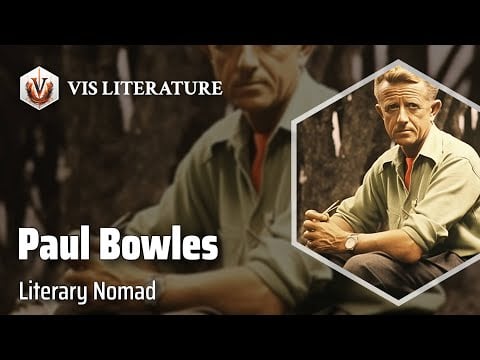
Bowles appears as The Narrator. It’s a weird cameo, as we hear his narration, a means of getting more of his great prose into the film, but his lips never move. The narration comes across as his inner monologue but, because he is never identified, those unaware that they’re looking at Paul Bowles may wonder who this mystical old man is and why he’s in the movie.
A “making of” documentary declared the film, without irony, a “producer’s nightmare.” Bertolucci and Mark Peoples wrote the screenplay, which attempts to be as faithful to the novel as possible.
This is Bertolucci basking in the Oscars and box office success of “The Last Emperor” (1987), leaning into his reputation as an exquisite director who takes on provocative, challenging material. Bertolucci paints his visual canvas like the artist he is and has a true master capturing the many visions on hand.
Vittorio Storaro’s cinematography matches the grandeur and elegance of “Lawrence of Arabia” (1962). This is one of the dreamiest, most superbly photographed films I’ve ever seen. The music and imagery are celebrated, while the rest will test your patience, whether you’ve read the book or not.
“The Sheltering Sky” is flush with imagery I’m happy to revisit, mixed with unpleasant melodrama that is hard to watch, followed by more visual splendor and back to more melodrama.
For a film so lavish and intricately detailed, it often feels like it’s a coasting, downbeat travelogue. The novel often found enough internal insight and nuance to contrast this, whereas the film struggles when the characters aren’t touring their new environments.
When the film fails, it seems as airless and unceasing as Kit and Porter’s voyage. When it soars, however, there are riches here to experience at least once.
35th Anniversary: THE SHELTERING SKY (1990) Bernardo Bertolucci pic.twitter.com/BCr8pl4FhD
— Cinema Phenomenology (@phenocine) October 25, 2025
It begins with a gorgeous crane shot, with the camera flying upwards into New York. The celebrated scene and famous single take of Winger walking up a sand dune, with miles of desert behind her, is sublime.
So are the sequences of travel parties making their way through desert landscapes, with not a footprint or sign of life in sight. Or the shot of camels sitting around after a long day’s walk through miles of sand.
Winger and Malkovich were at the top of their fields here and succeed at achieving what the screenplay requires at surface level, but they fail to bring true nuance and pathos to their characters, which the film sorely needed.
The third act is nightmarish, but it would be even more harrowing with actors who connected with Kit and Porter’s humanity. Winger and Malkovich are compelling and work hard, but they’re playing snobs and little more.
Bertolucci makes Tunner and the audience a tourist along for the ride, which is sometimes captivating and often a test of our patience. Every off-putting scene with Timothy Spall’s grotesque caricature makes me grateful for the long passages of travel.
“The Sheltering Sky” is stronger as a visual journey through a lost time than a proper exploration of a failing marriage and the couple’s doomed adventures. Bowles’ novel isn’t unfilmable, as some have complained, but for all the intense acting and narration on hand, the film never fully penetrates the aching heart of its characters.
FAST FACT: Bernardo Bertolucci’s father, a film reviewer, exposed the future Oscar winner to the art form at an early age. Bertolucci shot his first two short films at 15.
The first time I read Bowles’ novel was on a long train ride from Colorado to Oregon. I sat in a train car with massive windows and long couches, providing a space for passengers wanting to read (the most popular car on the train, without much competition, was the one designated for Smoking).
Although the story is sad and the narrative developments of Kit and Porter are tragic, I sat enraptured, taking my time to finish the novel. It remains one of my favorite books.
The last words in the film are uttered as thoughts from Bowles himself. This passage appears early in the novel and was intriguingly repositioned to conclude the film. Because I love it so much, having read and re-read it often, here it is, in full:
“Because we don’t know when we will die, we get to think of life as an inexhaustible well.
Things happen only a certain amount of times. And a small number, really.
How many times will you remember an afternoon of your childhood…an afternoon so deeply a part of you that you can’t be without it? Perhaps four or five times more? Perhaps not even that.
How many times will you watch the moon rise? Perhaps 20. Yet, it all seems limitless.”
-Paul Bowles, “The Sheltering Sky”