
The Novel as the Foundation of Art
Or, why great movies like 'The Godfather' aren't being made today
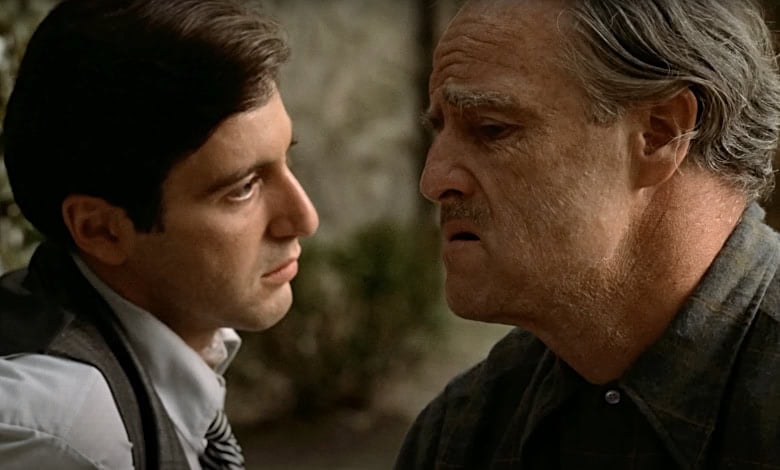
I love movies, I want to save movies, and this is about movies.
I was always in my seat at the theater early enough not to miss a single trailer and rarely missed a new release there. Movies have been my passion since my youth. And I, like you, recognize the general loss of creativity in American cinema. The effects (“Independence Day’s” city destruction, “The Thing’s” disgusting animatronics) have been replaced with CGI. The CGI has been replaced with bad CGI.
It’s Not Just the Visuals
Once, not just memorable but transformative music has become largely functional. The scores for “The Godfather,” “The Rock,” and “Bram Stoker’s Dracula” are still etched into my memory, and “Jurassic Park” and “Star Wars” in yours, but lately? Even the best (Hans Zimmer’s work on “Interstellar” or “Dune”) does not stick in the mind, does not form a part of popular consciousness.
And don’t get me started on the casts. How often have you heard the phrase, “The Last Great Movie Star” lately? There are still some good ones, like Michael Fassbender and James McAvoy, but do you agree with me on the trend line, from Bogart and Stewart, through Brando, Hopkins, Cruise and Fiennes, to Fassbender and McAvoy, that the acting skills are still there, but the impact has faded? Great performances, like great music and effects, used to feature in the cultural consciousness in a way they no longer do.
And that, I think, is the key: It’s not that technical capability is being lost, but that technical capability no longer produces cultural impact. Why? Writing. I didn’t mention writing above, but I bet you already got there.
Stories these days just aren’t that good, as a rule, and so the rest is not as inspired. We rightly decry the woke influence, political correctness and that movie writing today seems not even to shoehorn in a leftist credal declaration or jeremiad, but to start there, and build a “story” and “characters” around that.
Of course, screenwriters are pressured to do so because that’s their surest route to social acceptance and financial success, but ask yourself: If you freed these writers from the propaganda strictures, do you think they could write something good? I don’t.
What Conservatives Are Missing in the Culture Wars
And reality is not much better on the conservative side. There have been a few welcome, and a fewer good, “conservative-coded” movies and shows, but have they rocked you? Have they stayed with you like “The Godfather” and “Jurassic Park” did when they first took the culture by storm? Have they been Great Art? Or have most of them been workaday and largely reactionary, driven by an impulse to punch back, rather than a pure positive impulse to make something beautiful?
Back to the equations: We don’t have great writers in cinema anymore, because we don’t have a culture of the written story, a culture of writers generally, from which to draw.
From Michelangelo’s David or Handel’s Messiah, to the great plays of Shakespeare and the great operas, story is at the heart of all the greatest works of art, regardless of medium. The story inspires the artist, and the art is great because it evokes the story. The other great works, which don’t have obvious stories behind them (think of the Mona Lisa or Beethoven’s great symphonies), hit you because they invite you to a story you can’t quite see, and your brain is lit afire with speculating about it.
I challenge you to listen to the three movements of the Moonlight Sonata and not detect a visceral narrative in it. They call them “movements” for a reason. These great works come from a story-rich culture, and they could not have been made by a culture that was not story-rich.

What makes a culture story-rich? Long, complex, deep, honest stories about people. As Christians know, the root of existence is Person, and the fundamental dynamic of reality is personal relationship.
Personal relationship drives everything else, drives the Word which made everything and gave it laws and motion, and then became flesh and entered into a relationship with us. Thus is God’s word to us a narration of a relationship—character, plot, and dialogue—rather than a simple dictated law. Any culture built on stories reflects this reality, even if blind to it.
The ancient societies whose art we still cherish today, still placed in our great halls, from the Greeks to the Chinese, were marked by deep storytelling, the Greeks with their epic poetry, the Chinese and Japanese with the earliest novels ever written. The extent to which a culture exhibits long, complex, thorough, character-driven storytelling, especially written storytelling, is the extent to which that culture can make every other kind of art.
And it’s not quite enough that someone writes. If the lack of good screenwriting is the f’(x), and the lack of writers generally is the f(x), then the x which marks the spot, the root of it all, is that the rest of society does not read. That’s my proposition: We don’t have a culture of writers because we don’t have a culture of readers.
Does Anyone Remember Reading?
Think now about the years when movies were reliably great, reliably impactful on culture. What else characterized popular art consumption at that time? The novel. Stephen King, Dean Koontz, Tom Clancy, Michael Crichton, and John Grisham dominated the checkout aisles at your grocery store, where energy drinks and candy now tellingly reign.
The novels of Phillip K. Dick, Ernest Hemingway, Kurt Vonnegut, Arthur C. Clark, Ray Bradbury, Virginia Woolf, and Tony Morrison were consumed outside a scholastic setting, by the average person, for fun!
Remember that? Reading novels for fun? Settling down to scare yourself with the latest King, or indulge in the latest Nora Roberts?
Remember when “Lord of the Rings” was not the only “old” novel anyone you actually knew had ever read? When did you last hear all your friends arguing about which was better, the book or the movie? If you’re too young to remember it, you’re too young to remember when movies were consistently good. A culture that does not read real fiction cannot produce great writers of fiction.
Such a society cannot produce good new stories, nor can it produce great screenplay adapters (as this art is essentially the fictionalizing, or further fictionalizing, of the source work). Nor can it produce studio executives and producers who have any sense of story, and therefore any appetite to invest in story and, consequently, art.
If you watched the drama miniseries “The Offer” about the making of “The Godfather” movie, you saw how it depicted the producers and director going to desperate lengths on behalf of an artistic vision which they believed in and could see in their minds, inspired by a novel.
They can be people of art because, first and foremost, they are readers.

“The Offer” is now historical fiction, a period piece. In modern Hollywood, the same souls are now dead, from the investor, to the producer, to the director, to the screenplay writer and actors. They are soundbite-driven, data-driven, shallow, devoid of empathy, churning out cookie-cutter work, mistaking a political thesis and vitriol for real depth.
This is because none of them read. None of them grew up reading, grew up steeped in long, deeply engaging stories about people. That isn’t their culture.
There is no easy solution. Making conservative movies and TV is not magically going to produce good movies and TV. Nor is money going to solve the problem. Conservative media pundits contest that conservative industrialists should, like moguls of old, invest in conservative movies and studios, but why would they? They aren’t consumers of story.
The modern conservative industrialist is enthralled with meme culture, or the market and its dollar, or else convinced that another polemical non-fiction treatise will finally win the war of ideas. He considers himself much too busy and practical to read novels, much less to invest in film. And in what would he invest, given the quality of story a non-reading culture produces?
And are you any different? Are you much too busy and practical to read a novel today?
(But are you really any busier than a married, working father of three in the 1990s, like my ER physician father who read “Salem’s Lot” between patients in an empty hospital room? Or have you just chosen other forms to fill your time? Cheaper, shallower, but more addictive forms?)
Don’t Call It a Comeback
No, the answer is not more conservative movies and shows, nor more money invested in either. The solution, I’m afraid, is something like Rod Dreher’s “Benedict Option.” Great cinema will come back when a reading culture comes back, and a reading culture will come back when you raise your children to read stories and novels.
You can encourage that by taking control of their upbringing, educating them either at home or in classical-model schools as Dreher describes, with a focus on reading. But remember, your children ultimately will do what you do. If you send them to school to read, but you don’t read, you have told them as surely as shouting it that reading is something one does because one must, for school, and not for fun. You’ve told them that reading is work to be survived and then escaped.
There is no recovering the phenomenon of great cinema for now, not as it was. All you can do is get back to reading and writing great novels. They don’t have to be literary masterworks, but they do have to be well-written, fairly long, people-driven, fun, interesting, surprising and inspiring.
If you can’t write them, you must at least find them and consume them, and consume them in front of your children. Teach your children to love them. This much, we hope, may produce a few small Benedictine communities with artistic soul, and from these, we dare dream, may occasionally come a great work which becomes a great screenplay which becomes a great movie.
William C. Collier is a novelist and movie enthusiast when he is not a police officer, Naval Aviator and fire support officer, hunter, fisherman, sailor, musician, videogamer, tabletop gamer, cook, foodie, shooter, martial artist, etc. He is the author of “Outsiders” and the more recent novella on Kindle, “Secondhand Warriors,” as well as the forthcoming “City of Light.“
He also reviews new novels befitting conservative readers at his website, so if you are writing fiction, let him know. He would love to review your work and help rebuild a culture of fiction-reading.
Nice article.
an echo of Walt Whitman:
‘To have great poets, there must be great audiences.’
There is much wrong in the world. Fixing it requires us to comprehend the world; and that in turn requires us to have an education, shorthand for an habitual, reflexive way to recognize and prefer the Good, the True, and the Beautiful.
Educating children is the RESPONSIBILLITY of their parents. Period. Full stop. They can deputize school boards and hire out the chores, but they cannot escape the RESPONSIBILITY. If you value the lives of your children and grandchildren, do what you can to reform our corrupt and harmful public education systems.
I’ve been saying this for years. That’s why my favorite all-time perfect movie is Sense and Sensibility.
I wouldn’t confess that to my guy friends, but it is perfectly acted, perfect storyline, great cinematography, and a great score.
Every character in that movie plays their role to perfection.
That’s also why I tend to watch British period pieces. They seem to have better storylines..
Excellent and thought-provoking. Thank you.
As I recall, the book was always better than the movie.
Having worked in show business both as a writer, and story editor as well as briefly in front of the camera, and despite being away from it for quite a while now, it’s not that as you say “Conservatives are missing from the culture war” It’s that the other side controls “the means of production” Pun absolutely intended. They are the gatekeepers as well as the financiers, both in production as well as in publishing from whence great stories like the Godfather came. Alas, no more.
My contention is that supply is not the root of the problem. Whether chicken or egg, conservatives have stopped in large part desiring to read fiction. They focus on reading the latest polemic (the latest inflammatory book about what liberals are doing in schools or in the healthcare system–basically the Regnery Press new release list) rather than reading stories, much less stories for fun. The gatekeepers of fiction don’t want to cater to conservatives, it’s true, but also conservatives don’t want to be catered to. If they did crave good novels, means would arise in the marketplace for them to find the conservative indy writers who are writing good stuff, but they really don’t hunger for it. The appetite to read fiction isn’t there. And that is the problem. They think they can save their culture with non-fiction educational reading about the history of critical feminism or the life of Churchill, along with some consumption of the classics and yet another rereading of LotR, but that’s where they’re wrong. If they aren’t consumers of story, and innovators of story, then they can’t make anything else on which culture actually stands. The culture they’re trying to conserve will wither and die behind them while they try to hold a shield wall with their war-of-ideas polemics and social media posts, because societies don’t survive on civic theories and history. Those things inform, but it’s stories that make the society’s soul. Always have been.