
These 6 Artists Censored Their Own Work
Filmmakers, comedians and Hollywood icons had serious seconds thoughts
The “buy physical media” argument grew again this week … with a caveat.
We’ve seen examples of classic works getting tinkered with for several reasons.
- The work itself is no longer “woke”
- The artist in question had second thoughts
- The art wasn’t up to snuff, creatively speaking
A prime example? The 1971 Best Picture winner “The French Connection” had a racial slur censored from the film on multiple platforms.
The only way to protect yourself from censored art? Buy the film or TV show on physical media. Except fans of the 1998 film “Pleasantville” will get a rude awakening if they do just that.
Shout! Factory’s new 4K Blu-ray edition of director Gary Ross’s drama snipped a line from the original film. The theatrical version finds Reese Witherspoon’s character saying, “I did the slut thing, David. It got kind of old,” to her brother, David (Tobey Maguire).
The “slut” line got the heave ho in the latest version. World of Reel says Ross himself approved of the censorship. Entertainment Weekly reached out to the director for comment, but the story has not been updated.
If Ross approved the censorship, he’s not alone. Here are five other examples of artists who have censored their own work.
George Lucas, “Star Wars”
It’s perhaps the best example we have of this phenomenon. Lucas’s iconic film changed Hollywood on many levels, but the filmmaker later went back and souped up the film’s special effects.
That’s not all he did.
Lucas also had the treacherous Greedo character shoot Han Solo first before the rapscallion could do the honors. The original version had Solo gunning down the character, an early sign of his dangerous nature.
Steven Spielberg, “E.T.”
The Oscar winner circled back to his 1982 smash to soften the imagery for young audiences. Specifically, Spielberg removed the guns being held by the government agents chasing down poor Elliott and his extraterrestrial buddy for the movie’s 20th anniversary.
They became walkie-talkies in the “updated” version. Many fans howled at the switcheroo, and even Spielberg later admitted he made the wrong call.
“I never should have done that. ‘E.T.’ is a product of its era. No film should be revised based on the lenses we now are, either voluntarily, or being forced to peer through.”
Walt Disney, Inc., “Song of the South”
The 1946 film’s signature song, “Zip-a-Dee-Doo-Dah,” won an Oscar. The movie itself earned re-releases up until 1986. That’s when Disney ruled against a home video version of the controversial film and shelved it indefinitely.
That’s where it remains, an artifact of another era that critics say glossed over the horrors of slavery in ways that make its re-release unfathomable today. Others disagree, but the point is moot. The modern Disney company would sooner release “The Mandalorian and Grogu 2” than “Song of the South.”
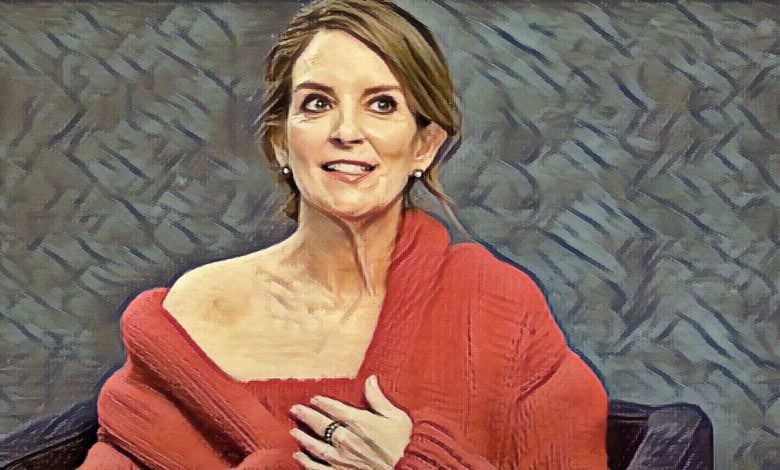
Tina Fey, ’30 Rock’ Episodes
The “Saturday Night Live” alum once told an interviewer she won’t explain jokes moving forward. At the time. Fey stood up for a comedian’s right to tell jokes their way and on their terms.
That Fey gave way to a woke version, one who quickly blinked following the death of George Floyd in 2020. Suddenly, any show or film that so much as hinted toward blackface had to be excised from the culture.
Fey did just that. She starred and co-produced the NBC sitcom “30 Rock,” and she approved the decision to remove four episodes from the series that flirted with the subject.
“As we strive to do the work and do better in regards to race in America, we believe that these episodes featuring actors in race-changing make-up are best taken out of circulation.”
Jerry Lewis, ‘The Day the Clown Cried‘
The comedy maestro’s Holocaust drama has never seen the light of day. That was by design.
Lewis felt the unfinished 1972 film was so bad it should never be shared with the public. The plot suggests part of the reason why.
Lewis plays a circus clown who angered Adolf Hitler during the Second World War. His character is sent to a concentration camp, where he’s forced to entertain child prisoners and, ultimately, lead the unsuspecting tykes into the gas chambers.
Footage from the film exists, and since 2024 is available in very rough form at the Library of Congress. Lewis passed in 2017.
Look at what publishers did with, “To Kill a Mockingbird”. Harper Lee’s portrait of her father, as Atticus, originally included a more realistic version of a honorable Southern lawyer during the Democrat’s Jim Crow era. Atticus was rewritten so that he hadn’t battled with any personal racial prejudices. Although “Mockingbird” was a massive international bestseller, Lee’s next novel, “Comes a Watchman”, was rejected for publication, again due to the author’s balanced and realistic portrayal of the hero’s racial prejudices occurring within the storyline.
We commonly see Hollywood alter content to sell its films, especially after 1945. Over the past decade, their manipulations have so altered established stories as to caused films to fail with audiences.
A good story can be lost if censorship reduces its believability.
Tina Fey’s caving on it is especially galling because it’s not as if the passage of time had seen a change in society. Every instance of blackface on 30 Rock was being done by liberals who are conscious of exactly how offensive it is and that’s what they’re making fun of. Two of them are because the character of Jenna Maroney lacks the brains to realize she’s being offensive; another is just making fun of tv shows that had whites playing minority roles.
* Jenna and her boyfriend decide to do a couples costume going as two black swans…and then when they do it, her boyfriend is dressed as the female character from the film and Jenna is dressed as a black football player named Swan.
* Liz runs into Tracy Jordan to find him dressing up (terribly) as a white woman because he and Jenna have been arguing about who has it tougher in society, women or blacks. Horrified, Liz says, “Wait, what is JENNA doing?” and she screams because Jenna is dressed as a black man and singing “Ease on down the road”. And it goes by very quickly, too.
* In a flashback to old-time TV, Tracy Jordan plays a black actor who is appalled at his white co-star doing a black caricature. The “blackface” is really no more than scribbles because they didn’t dare go there.
This all happened in the weeks after George Floyd when people were on the warpath looking for racism, and our media was clearly frightened. Tina Fey released one of those pre-written-by-lawyers “I didn’t realize this was a bad thing and I clearly need more education on the subject” statements. Community did the same with their Dungeons and Dragons episode. Hartley Sawyer who played Elongated Man on The flash (and a BLM supporter on Twitter) was busted by an influencer looking for racist scalps and she called him out for very old pre-fame tweets that aren’t even racist, but the VERY NEXT DAY The Flash TV show fired him and they released a statement that said one sentence about Hartley and the rest was all Black Lives Matter. The guy never worked again. White celebrities were just SCARED and doing whatever they had to do to not have the magnifying glass pointed at them. Cave and it becomes a one-day story. If Tina tried to defend the choices and explain them, maybe it would be her who no longer had a career.
Harry Shearer is the most prominent public figure to have viewed Jerry Lewis’s unreleased 1972 Holocaust film, The Day the Clown Cried, and his scathing review cemented the movie’s reputation as a cinematic disaster. Shearer claims to have seen a rough cut in 1979, initially stating Lewis screened it for him, though he later clarified in a 2011 Howard Stern interview that he viewed it surreptitiously via a tape provided by an associate.
In a famous 1992 Spy magazine article, Shearer described the film as a “perfect object” of failure, famously comparing the experience to seeing a black velvet painting of Auschwitz in Tijuana. He asserted that the movie’s pathos and comedy were “wildly misplaced,” stating that “you could not, in your fantasy of what it might be like, improve on what it really is.”
Shearer’s vivid and negative assessment has dominated public perception of the film for decades, with many critics and audiences accepting his view that the production was tone-deaf and tasteless, despite Lewis’s own admission that he was embarrassed by the “poor work.”
Remember: nothing existed before the current regime. All culture and history can only be viewed through the current, approved lens. Except, of course, heroes of the regime (like, say, Margaret Sanger or Woodrow Wilson). All history will be scrubbed of context and properly rewritten to conform to, and confirm, the current “narrative.”
Acquiesce, pleb, or be bulldozed.
“A prime example? The 1971 Best Picture winner “The French Connection” had a racial slur censored from the film on multiple platforms.”
AND ONLY RACIST SCUM MISSED IT. There is no such thing as CENSORING YOUR OWN WORK. Since that’s reasonably called EDITING. What you right wing SCUM are complaining about is SOMEONE WAS CALLED THE N-WORD and WE GLORIED IN THAT WHEN WE HEARD IT since WE WOULD ARDENTLY LIKE TO USE IT IN PUBLIC NOT JUST IN PRIVATE. EFF you all.
His use of the n-word in the film is part of his character. Rough around the edges. Dismissive of other cultures. Unwilling to bend to societal norms. It’s creating a three-dimensional portrait. Audiences aren’t cheering the word on … we’re acknowledging that life can be ugly, that even heroes can have dark sides.