
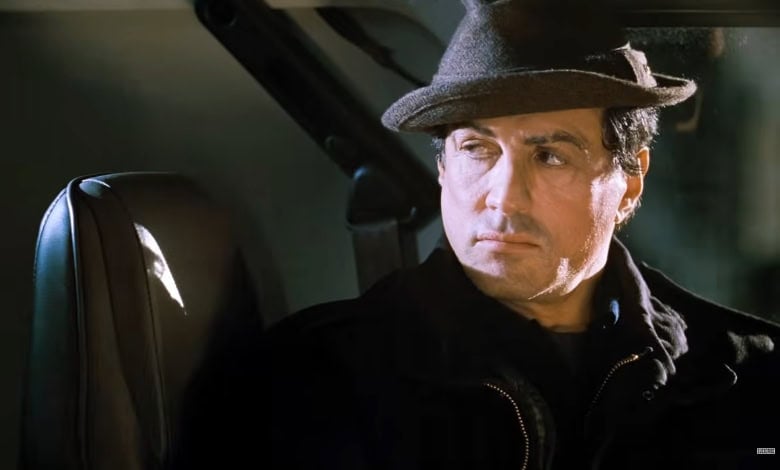
Writer/director Sylvester Stallone’s “Rocky Balboa” (2006) was a sequel we all knew would eventually arrive and secretly dreaded.
Was there still any life left, let alone storytelling possibilities, in The Italian Stallion?
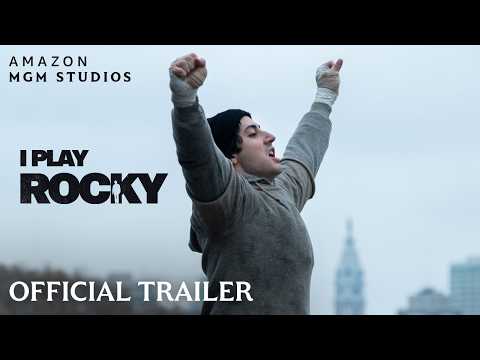
The sixth entry in the “Rocky” franchise is 20 years old and is countered by the arrival of the Stallone biopic “I Play Rocky.”
The story here is that Balboa, now much older and widowed, is haunting his old Philadelphia neighborhood and runs a small diner. Balboa still tosses out corny jokes, hangs out with Paulie (Burt Young), his self-destructive brother-in-law, and thinks about the golden days that are now long gone.
A great touch that both Paulie and the film itself determine: “Rocky Balboa” isn’t nostalgic. This isn’t a celebration of the past but a declaration of how empty nostalgia will leave someone in a state of limbo.
Balboa doesn’t get his luster back from a boxing ring but by rediscovering Marie (Geraldine Hughes, who nearly steals the film), a young woman he was kind to when he was still a nobody (the character originates from the original 1976 John G. Avildsen classic).
Balboa’s son Robert (now played by Milo Ventimiglia), Marie and even Paulie seem to be enough for Balboa, who aches every day over losing Adrian, the love of his life.

A silly “computer match” on ESPN, depicting a simulated bout between Balboa and the down but not out Mason “The Line” Dixon (real heavyweight champ Antonio Tarver), suddenly puts them both in the spotlight and creates interest in an exhibition match.
Stallone’s “Rocky Balboa” was a shocker in 2006 and not because its arrival was a surprise, but because the film is terrific. Once again, the life and career of the writer, director and star aligned and became another million-to-one shot.
The film’s creative and financial success was satisfying and wholly unexpected. Remember, not unlike his protagonist and not long before the film’s release, Stallone himself found his career had slowed down and appeared headed for limbo.
During the infamous 1995 Oscars, where David Letterman botched his hosting duties on disconnected material (everyone now, “Oprah…Uma…”), the late-night host did make one joke that landed hard: Letterman announced that Stallone was the first actor to make $20 million a film and noted, “I wonder what film he’ll make next…or what Roman numeral he’ll put after ‘Rocky.’”
Cut to Stallone, who was in the audience, loved the joke and could be seen laughing hysterically. Yet, as the ’90s went on, the mega-movie star’s career was in an unsteady place, as competition and some bad films had undermined his former ’80s dominance.

The luster of the “Rocky” and “Rambo” sequels, as well as enjoyable hits like “Tango & Cash” (1989) and “Cliffhanger” (1993), had worn out by the early 21st century, when Stallone was the star of hits like “Spy Kids 3-D” (2003) and many flops like “Eye See You” (2002).
News of the star making one final return to the story of Balboa felt like the last attempt to reclaim creative and commercial glory that is clearly was. Instead of the film vanishing after one weekend to audience indifference, it became one of the year’s biggest box office, audience and critic’s sleepers.
I didn’t believe how Balboa could renew his boxing license, or how the climactic match (more on that later) goes on so long that it becomes a do-or-die battle. Where the film always works is in the character moments, which Stallone generously shares with his ensemble.
Every scene between Stallone and Young is golden, though Hughes’ unforced vulnerability is the film’s biggest discovery. The charged exchanges between Balboa and Dixon are enjoyable, though the biggest casting inspiration was bringing back Tony Burton’s Duke Evers, who is always imposing and effortlessly believable as the former trainer of Apollo Creed.
There are so many thoughtful, soulful moments here that draw tears from me, particularly when Paulie admits, in his tortured, unguarded way, how horrible he was to Adrian, even during the “good times.” For the record, few scenes in any recent film move me more than the sequence in Ryan Coogler’s excellent, subsequent “Creed” (2015), where Balboa gets a doctor’s diagnosis and immediately mentions Adrian’s fate to understand his options.
“Rocky Balboa” has a great first and second act, then a wonderful training montage to get the Bill Conti score roaring again (that said, I’ve never seen a better training montage in any film than the Rocky in nature sequence from the 1985 “Rocky IV”).
RELATED: 20 INSANE ‘ROCKY’ FACTS EVERY FAN SHOULD KNOW
What follows is the boxing match finale, which is where the film gets on unsteady ground: sometimes shot in close-up (the best decision for these kinds of sequences) but mostly like an actual ESPN televised fight, which messes with the continuity, suspense and momentum.
The back-and-forth use of stylized black and white enhances some moments but, as demonstrated in Scorsese’s “Raging Bull” (1980) and Stallone’s “Rocky IV,” these set pieces are always the best when shown up close and personal.
The uneven climax is the only patch of “Rocky Balboa” I don’t love, whereas there isn’t a moment of “Creed” or its 2018 sequel that goes wrong.
The comeback of Balboa and Stallone not only led to the remarkable film career extension for the star (who knew “The Expendables” would become a hit franchise?!) but mirrored the I’m-not-done-yet legacy of his most enduring character.
They’re still making movies about Balboa and the man who played Rocky who, against all odds, isn’t going anywhere, either.