
Audiences Want to Be Entertained Again
The industry must solve its messaging problem before A.I. takes over
Hollywood used to understand something that seems almost quaint now: people buy movie tickets because they want to see a good movie.
Not a two-hour lecture. Not a corporate DEI statement with a $200 million budget. Not a beloved character dragged back from retirement so the studio can attach whatever esoteric cultural message happens to be fashionable that quarter.
A good movie, full stop.
That simple distinction came up repeatedly when my favorite Yankees fan, Christian Toto, joined me on my show “Dangerous Laughter.”

Toto has spent years watching Hollywood from the inside as a critic and chronicler, and his book “Virtue Bombs: How Hollywood Got Woke and Lost Its Soul” took a hard look at the industry’s obsession with political messaging. But the more interesting question now isn’t simply how Hollywood got woke.
It’s whether Hollywood has finally figured out that audiences are getting tired of it.
And I don’t mean audiences are demanding conservative movies. That’s too easy. People want good movies. That should not be a controversial statement, but apparently we’re living in an era where it needs to be explained.
Disney provides perhaps the clearest case study. For generations, the company could put a familiar character on a screen and practically print money. “Toy Story” wasn’t merely a successful animated film. Woody and Buzz became part of the childhood furniture for an entire generation.
Parents who grew up with them can now take their own kids to see the same characters.
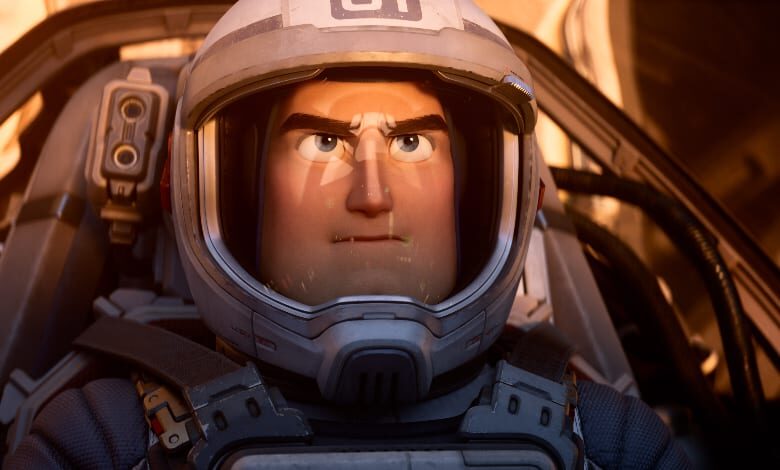
That makes the 2022 galactic flop “Lightyear” particularly revealing. The movie had the fundamental sin of being a bad fit for an audience that already had a very specific relationship with the character.

Tim Allen’s Buzz Lightyear was replaced by Chris Evans, the story went in a different direction, and the film became tangled in a controversy that had little to do with why audiences loved the original movies in the first place.
The messaging didn’t rescue a weak story. It made the failure harder to ignore.
And that’s where Hollywood’s problem becomes less ideological and more commercial. People can tolerate almost anything when they’re having a good time. They’ll sit through a political idea they dislike if the movie is funny, exciting, moving or beautifully made.
Great entertainment has always smuggled ideas past the audience because the audience wanted to stay for the ride.
The trouble starts when the ride becomes secondary. We got into that with Marvel and Star Wars, two franchises that once had something incredibly valuable: audiences who cared. I’m a giant geek myself, so this isn’t some outsider sneering at people who like comic-book movies.
Quite the opposite. That’s precisely why the decline has been so frustrating.

These studios inherited some of the most powerful storytelling properties in modern entertainment and somehow managed to make audiences feel like they were being marketed to rather than entertained.
That distinction matters because Hollywood executives spent years behaving as though the audience’s attachment to a franchise was essentially permanent.
It isn’t.
Nostalgia is powerful, but it isn’t infinite. You can remake the fairy tale, recast the hero, reboot the universe and announce that this version is going to be bigger and more important than the last one. Eventually someone in the audience asks the most dangerous question in Hollywood: Why am I paying for this?
The answer increasingly isn’t coming from Hollywood at all. It’s coming from podcasts, YouTube, independent filmmakers and comedians who figured out they don’t need permission from a studio executive to find an audience.
That shift is especially obvious in comedy. Think Bill Maher, Greg Gutfeld, Joe Rogan, Theo Von and Andrew Schulz, among others. The common thread isn’t that they all have the same politics.
They don’t.
It’s that audiences can hear an actual conversation rather than something that has been processed through six layers of corporate caution.
Maher’s willingness to have people from the Right on his show is revealing precisely because it shouldn’t be remarkable. Maher has said he invited figures such as Alexandria Ocasio-Cortez and Kamala Harris onto the program with no luck.
RELATED: LIBERAL BILL MAHER SAYS THE UNTHINKABLE
The difference is that appearing on a show like that means accepting questions you didn’t write and responding to someone who might actually disagree with you.
That is entertainment too. In fact, it may be becoming some of the most compelling entertainment available.
Our conversation then took an interesting turn toward Donald Trump, because Trump’s political success cannot really be separated from his understanding of entertainment and media. He understood long before most politicians that the old gatekeepers were losing their grip.
Put Trump on a traditional Sunday political show and he’s another politician waiting to be questioned. Put him on Rogan, Von or another long-form platform and suddenly the rules change.
Trump was never merely a political figure. He was a cultural figure long before he became president. He had already spent decades inside American popular culture, appearing on television, hosting “The Apprentice,” making various appearances on WWE, and giving interviews that cultivated his “bigly” persona that people recognize whether they like him or not.

That is part of what makes the succession question so difficult. Christian believes JD Vance and Marco Rubio may actually be more polished than Trump when dealing with hostile journalists. They can sit down, dissect an argument and bury an interviewer under facts.
But Trump’s particular combination of celebrity, instinct, humor, ego and sheer cultural presence isn’t something that can simply be handed to the next Republican in line.
Trump brings something else. He brings Trump. That isn’t transferable.
And the entertainment business is facing the same problem from the opposite direction. Hollywood has enormous resources. It has studios, stars, writers, directors, franchises and billion-dollar distribution networks. What it cannot manufacture on command is cultural trust.
That is why the next phase of this story may be more interesting than the last.
We talked about independent movies such as “Citizen Vigilante” and “Young Washington,” about the increasingly strange situation in which filmmakers sometimes feel they have to leave Hollywood to make the kinds of movies they want to make.
We talked about “Supergirl” and the superhero industry’s continuing struggle to convince audiences that another reboot is something they actually need.
And then there is Christopher Nolan’s “The Odyssey.”

Nolan may be one of the few filmmakers left who can put his name on a project and have people say, “I don’t know what this is, but I want to see it.”
That is the kind of trust Hollywood used to have in abundance.
Spielberg had it. Lucas had it. Cameron had it. There was a time when the director’s name on the poster could be enough to make people want to see what happened next.
Hollywood didn’t have to explain the message. The movie was the message.
And now AI is about to make the old Hollywood gatekeeping model even harder to defend. We talked about what happens when increasingly sophisticated tools allow independent creators to produce material that once required enormous studios, budgets and technical crews.
That’s potentially terrifying for the entertainment business. It’s also potentially fantastic for audiences.
Because the next great filmmaker may not be sitting in a studio office. The next great comedian may never get a late-night booking. The next cultural phenomenon may begin with somebody making videos in a bedroom and finding 10 million people who would rather watch that than another carefully focus-grouped Hollywood production.
Hollywood doesn’t need to become conservative. It needs to become good again.
Give people great characters. Give them stories they want to finish. Make them laugh. Make them cry. Make them angry. Make them think. Hell, make them uncomfortable. Just don’t assume they bought a ticket because they wanted to attend a corporate seminar.
The audience is still there. It has simply discovered that Hollywood isn’t the only place to find entertainment anymore.
A.J. Rice is the host of the Dangerous Laughter podcast, serves as president & CEO of Publius PR, editor-in-chief of The Publius National Post, and author of The Curse of the Bearded Lady: How the Trans Mafia Whacked American Sanity.
If you look at what has been successful-“Project Hail Mary,” “Backrooms,” etc-it’s also because they’re original. Hollywood lost that by relying on endless superhero sequels and reboots.
Watch the beginning of ‘The Three Amigos’. Mr. Flugleman had the right formula for a hit movie (back in the silent film era!).