
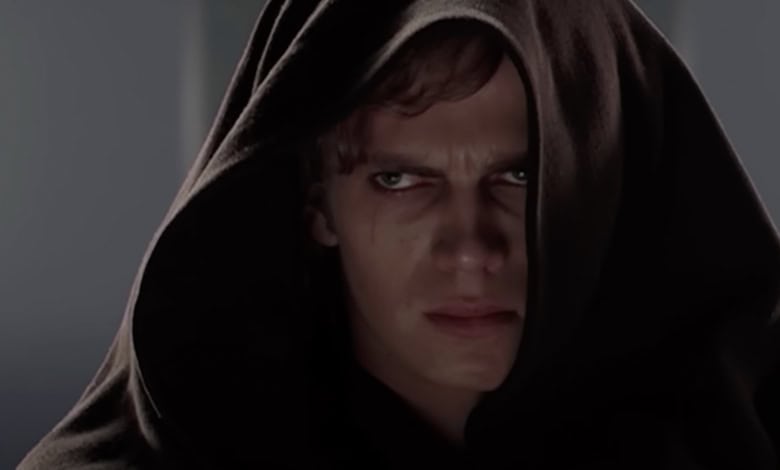
The architecture of George Lucas’ imagination merges in his third “Star Wars” prequel, “Star Wars Episode III: Revenge of the Sith (2005).
Now returning to the big screen for its 20th anniversary, this highly debated final entry in the prequel trilogy has slowly acquired a fanbase since its Cannes Film Festival premiere.
The film is still flawed in some ways and quite extraordinary in others.
The release of the “Star Wars” prequel trilogy, “Episodes I-III,” was met with mixed reviews upon release and mostly contempt from longtime fans of The Force. The films don’t deserve to be treated like cinematic black sheep.
In fact, considering how strong the final 2005 release is, I suspect a reassessment and prolonged appreciation of both Lucas and his 1999-2005 directorial work overall is in order.
Add the passing of time and the positive reception to the Disney+ TV series extensions of these prequels (particularly “Obi-Wan Kenobi,” which revisits the central figures of “Revenge of the Sith”) and you have an altogether different assessment of their value.
The uneven quality of the first prequel, the enormously popular but now widely unloved “Star Wars: Episode I – The Phantom Menace” (1999) gave way to the superior, underrated and mostly grand “Star Wars: Episode II- Attack of the Clones” (2002).
The criticisms hurled against the initial entry carried over to the second and were mostly absent by the third.
Lucas’ longstanding vision of the fall of Jedi apprentice Anakin Skywalker (Hayden Christenson), his betrayal of his best friend and teacher Obi-Wan Kenobi (Ewan McGregor) and directionless dalliance with Padme Amidala (Natalie Portman) had reportedly always existed in his mind.
Prior to “Sith,” that vision was never realized on film.
Everything comes together so well in “Revenge of the Sith,” both as a fantasy/drama and as a bridge to the older films that begin with “Star Wars: A New Hope” (1977), it seems as though Lucas hit his creative stride in finally bringing the crucial third episode to life.
In “The Phantom Menace,” the film peaked with the extraordinary pod race sequence, showcased a pulse-quickening, three-way light saber battle but mostly struggled to connect on an emotional level. “Attack of the Clones” had a similar on-again, off-again quality, but featured a coliseum battle/Yoda unleashed climax that salvaged the film (and its unfortunately clumsy love story).
In “Revenge of the Sith,” Lucas gets things off to a running start from the first frame: a terrific outer space dog fight leads to a series of extended cliffhangers, with some leftover business from the prior film reaching a conclusion.
The rousing start builds to a standout scene, in which the brooding, emotionally immature Anakin Skywalker meets with the sinister Palpatine (Ian McDiarmid) at an odd, opera-like event (the visualization is gorgeous, but it’s impossible to tell if it’s performance art or a musical production).
This carefully paced sequence, in which Palpatine verbally seduces Skywalker into embracing the Dark Side of the Force, is one of the best-written and most pivotal in the entire franchise. From there, the film remains on strong footing and, even with a few missteps, is consistently terrific.
Many complain about the uneven acting, but the storytelling and filmmaking are so strong they keep this space opera focused. Christensen’s line readings are hit and miss, but his take on Skywalker’s petulance and escalating madness is just right.
The Chosen One is ready to celebrate the 20th anniversary of Star Wars: Episode III – Revenge of the Sith with the theatrical re-release.
Experience it in theaters April 25. pic.twitter.com/zoQAUSCFS5
— Star Wars (@starwars) April 24, 2025
When you consider Lucas’ overall take on Darth Vader, that the man behind the mask is a stupid, arrogant young man who brings about his self-destruction, Christensen’s often unlikable portrayal feels in key with the character arch. Lucas’ take on the young Vader-to-be is unsympathetic, gloomy and that of a misguided fallen prince, an intergalactic Hamlet.
The presence of R2-D2 and C-3PO, the Rosencrantz and Guildenstern of this galaxy, only pushes this idea further.
Portman’s last scene with Christensen is wrenching (in fact, both Portman and her co-star’s performances get better as the film progresses), though she has some of the most intriguing lines early on.
I’ve never been compelled by the political qualities of these movies, but this one had me intrigued. Portman has a few tasty lines: “This is how liberty dies…with thunderous applause.” She also asks Anakin, “Have you considered we’re on the wrong side?”
At the time of the film’s release, some questioned if Lucas was criticizing President George W. Bush. It seems more likely he’s urging viewers to not simply stand by while a wrongful leader or powerful figure takes control.
This could also reflect Lucas’ famous stance on having artistic control on his work and not allowing outside influence to compromise his art.
The film belongs to McDiarmid, who is so magnetic and vile as the film’s true villain, that his performance anchors the film. McDiarmid makes choices both subtle and wildly theatrical, resulting in a true tour de force in a film (and series) not always associated with fine acting.
RELATED: ‘STAR WARS’ COLORING SHEET FOR THE KIDDIES
McGregor also has some great moments, particularly his sad, “You were the chosen one” lament at the film’s end. The CGI Yoda is as expressive (and athletic) as ever, and there’s the glorious image of the tiny green Jedi master getting a piggyback ride from Chewbacca.
While the highly-touted Wookie battle scene goes by too quickly, Lucas wisely edits back and forth between the two duels between Yoda and the Emperor, and Anakin and Obi-Wan; the former is spectacular, while the latter is equally a visual marvel but goes on too long.
Moments of comic relief are brief and welcome, as this isn’t just the darkest in the series but also contains violence that is downright sadistic.
The somber, central set piece of “Order 66” (the number is likely intentional, as is Palpatine’s resemblance to the devil) is strong stuff. So is Skywalker’s physical demise and transformation into one of the most famous villains in cinema.
All of this is done so well, with an emotional richness that took me off guard, it concludes with the feeling that Lucas capped off his highly touted and debated return to directing with one of his best “Star Wars” movies.
Both popular in theaters and underappreciated today, “Revenge of the Sith” is Lucas unleashed.
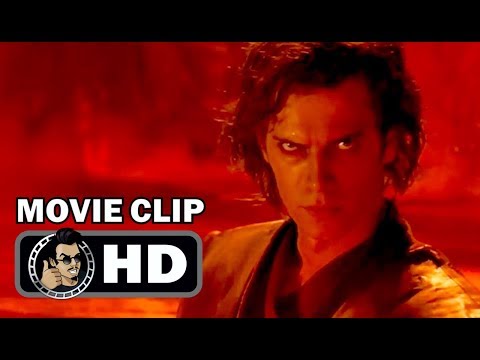
Only watched this movie once in the theater, and all I really remember is thinking – will this lava field fight ever end? I also thought H.C.’s recitation of the “Yes, master” lines was awful. It might have been shooting for petulant, but just sounded wooden. At least they weren’t sliding off the sides of an exploding space cruiser in the upper atmosphere right onto another spacecraft like in one of the newer ones. You can only suspend belief just so much.
Sorry man, Franken-Vader was ridiculous. And Hayden’s whine factor was at an 11. I do agree that it got a lot right and I’ll take it over any of the abortions Disney keeps pushing out but it was not peak Lucas. That happened with Empire. It was all downhill after that.
The Star Wars prequels have always been a mixed bag for me. While they feature standout performances from actors like Natalie Portman, Ewan McGregor, Liam Neeson, and Ray Park, they’re also weighed down by elements that just don’t work. Characters like Jar Jar Binks and the overly whimsical aquatic civilization felt out of place, relying on forced humor and an overabundance of CGI. The story itself had too many plot holes and didn’t transition smoothly into A New Hope.
By the time Revenge of the Sith rolled around, there was a glimmer of improvement. Hayden Christensen, who felt mediocre in Attack of the Clones, showed flashes of talent here and there. Of the three prequels, Revenge of the Sith stands out as the best, though it still suffers from uneven scriptwriting and an over-reliance on cartoonish CGI
.
The prequels remind me of The Matrix sequels, where the focus seemed to be on showcasing CGI technology rather than delivering a balanced cinematic experience. Films like Rogue One, A New Hope, The Empire Strikes Back, and Return of the Jedi struck a perfect balance between physical sets, costumed actors, and CGI. I hope Hollywood rediscovers that balance in the future, but with AI’s growing presence, it’s hard to say where we’re headed.
Yup. Good take.
My favorite of all the Star Wars movies.