
Jim Henson’s “Labyrinth” (1986) is more than deserving of the cult following it continues to build worldwide.
Back in theaters to celebrate its 40th anniversary, Henson’s wild puppet fantasy, a hybrid fantasy/comedy/musical/fairy tale, carried two human actors who are surrounded by massive sets and hordes of puppeteers, was a box office flop in 1986.
Of course, we should consider that it was released during the summer of 1986, with the dominance of “Top Gun” and “Ferris Bueller’s Day Off.” There were lots of unworthy casualties that season – remember, John Carpenter’s “Big Trouble in Little China” also died that summer and has a fanbase as vocal as this one.

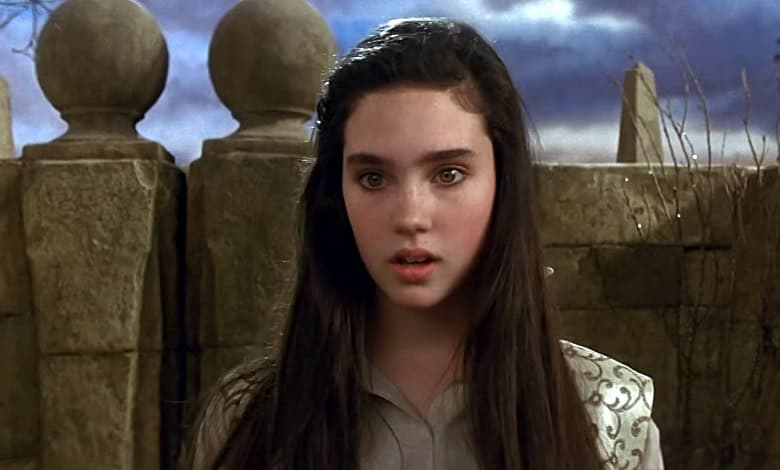
When we meet Sarah (Jennifer Connelly), she’s cosplaying a scene from a novel she carries with her, called “The Labyrinth.” Visibly alone in a park near her house, in costume, Sarah’s devotion to reciting fantasy lit dialog seemed strange in 1986.
Now, I can think of at least three people I know exactly like her, as well as recognizing her brand of fandom every time I’ve attended a Renaissance Fair.
In other words, “Labyrinth” was ahead of its time, and not just in its inching towards the kind of full-fledged fantasy epic Peter Jackson would attempt and pull off decades later (though other ’80s fantasies came close, such as the 1981 “Dragonslayer” and the 1985 “Return to Oz,” both flops-turned-cult films).
Henson’s protagonist, the 1980’s mall equivalent of Alice tumbling through Wonderland, was exactly the kind of genre fan and convention attendee that was not given pop culture distinction at this time. By the mid-’90s internet explosion, this time of open-and-proud-of-it-fandom is a part of the culture.
40TH ANNIVERSARY LABYRINTH IN US CINEMAS JANUARY
“What kind of magic spell to use?”
The Goblin King returns! Celebrate the 40th Anniversary of Labyrinth – in US theatres January 8–11 – starring David Bowie larger than life as Jareth in this beloved fantasy masterpiece.
Tickets… pic.twitter.com/tlvhMj5dqR
— David Bowie Official (@DavidBowieReal) December 10, 2025
Anyway, Sarah’s parents are leaving for the night and require Sarah to watch over Toby, her baby brother. Sarah couldn’t care less that her parents don’t get out much and is furious at the assignment. Taking a cue from “The Labyrinth,” Sarah half-heartedly uses the logic of the book to summon the Goblin King (David Bowie) to take her brother away.
When the Goblin King shows up, Sarah is frightened, suddenly thrust into a fantasy world of dream logic and bizarre creatures. Sarah pleads with him to give her Toby back, but he relents, instructing her to travel through the massive maze that leads to his castle by a certain time, or her brother will turn into one of his goblin minions.
With that, we’re off.
Bowie might have been better off playing the role without the massive wig, and the character’s motivations are somewhat vague in the third act – is this a seduction or, as in the rest of the film, is Jareth simply messing with Sarah?
The Goblin King seems to stand in for the cynical adult world that awaits Sarah, while her ascension into this fantasy world, as well as Connelly’s compelling performance, suggest a young woman just inching towards the tween years (Connelly was 15 when she made this).

It’s Connelly’s film and, even when she lands on a clunky line reading, she carries the film ably. Her sincerity helps us to believe in all the wild creatures she encounters. Considering that this was Connelly’s third film, and after working with Sergio Leone and Dario Argento(!), it’s no surprise that she wound up one of the best American actresses of her generation.
Diehard Bowie fans don’t typically cite this film as being among their favorites (the “Never Let Me Down” era never gets much respect), but really, this film made lots of kids too young for Ziggy Stardust an overnight Bowie fan (at least that’s my story).
The key ingredient isn’t Henson or co-producer George Lucas but Terry Jones, the Monty Python member whose sense of humor and character comedy is present during the best sequences: Sarah’s hilarious pep talk from a helpful, scarf-wearing and tiny worm, as well as the contentious door knockers and the bizarre creatures who present her with a riddle, all are fragments of peak Python lunacy.
Henson saturates the screen with oodles of puppets as much as he did in his magnum opus, “The Dark Crystal” (1982), though that film is far darker and meaner (and still better). A sequence where Sarah is chased by the Cleaners is riveting. So is the M.C. Escher-inspired finale, where Sarah pursues her baby brother in a gravity-free room.
When the film becomes a David Bowie video, it’s a mixed bag: the clunky “Magic Dance” is the fan favorite, but I love the eerie masquerade of “When the World Falls Down” and the rousing “Underground” so much more.
The stranger “Labyrinth” gets, the richer it is: hoarders will likely see their waking nightmare embodied by The Junk Lady. The Helping Hands are as arresting as they are unsettling.
Henson rightfully acknowledged the inspiration of Escher and Maurice Sendak in the end credits. Sarah’s bedroom items thoroughly suggest that the story is all in her mind, as various books (ranging from Sendak’s 1963 “Where the Wild Things Are” to L. Frank Baum’s 1900 “The Wizard of Oz) and figurines suggest the whole thing is in her head.

A deeper form of exposition has been spotted over the years that I find startling: an early pan around Sarah’s bedroom shows us newspaper clippings of her mother, Linda Williams, a stage actress, in a relationship with an actor who is clearly played by David Bowie.
This makes the scenes between Jared and Sarah have a darker, more pronounced weight, as he may be a representation of someone who seduced her mother in the past. As someone who grew up watching this movie and didn’t come across this subtext until recently (the slow-motion pan and scan Blu-ray option is, yet again, a reason I love physical media and what it allows film lovers).
Without this subplot, the film still works, but there’s an elevated danger knowing that The Goblin King, in some form, has always been a threat to Sarah.
I should also mention Trevor Jones’ score, which is especially good when the tone gets scary. The majority of “Labyrinth” is light and fun, though I find it most impactful when it leans into universal fears (that early scene where Sarah finds an empty crib and suspects otherworldly critters are sneaking around the room is terrific).
The episodic story, frequent tonal shifts and moments of camp are why I still give Henson’s “The Dark Crystal” the edge. That said, “Labyrinth” succeeds as a “Wonderland”-like fable, where the dangers of real life are conveyed in a skewered fantasy landscape.
Odd as it may be, the Goblin King remains Bowie’s most well-known acting role in a film. This is the insanely talented artist and part-time film actor who once worked for Nicolas Roeg, Tony Scott and David Lynch. Bowie played Pontius Pilate for Martin Scorsese and his best, most astonishing film transformation was playing Andy Warhol in “Basquiat” (1996).
Yet, who could forget the time he turned a glass ball into a snake, held it end-to-end and tossed it at Jennifer Connelly?