
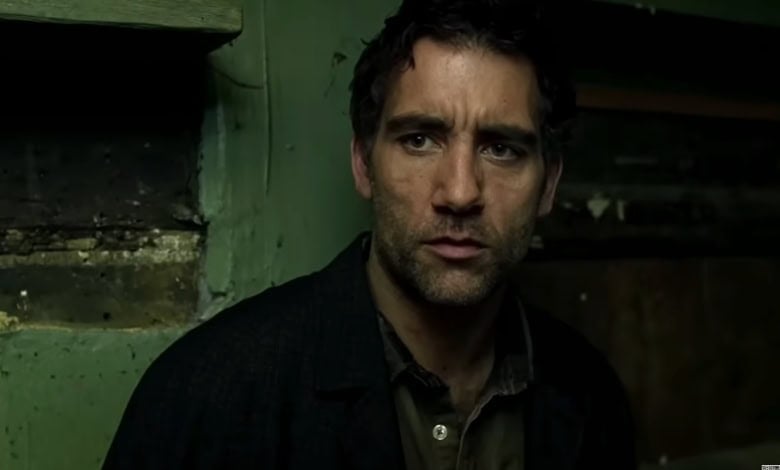
Alfonso Cuarón’s “Children of Men” (2006) takes place in London of 2027, a bleak world where, for reasons never disclosed, women worldwide are unable to become pregnant.

We learn that the youngest person on the planet has just died and that the fate of humankind appears dire. Clive Owen stars as Theo, a bureaucrat with a haunted past who shares a cynical view of humanity.
Theo’s former lover (Julianne Moore) is a wanted political activist who assigns him a monumental task: to ensure the safety of a woman named Kee who, miraculously, has become pregnant.
Theo must take Kee on a journey to a safe haven, referred to as The Human Project, and protect her from the violence constantly breaking out around them.
“Children of Men” has been designed to create an immersive experience for the audience and succeeds brilliantly at shaping that you-are-there immediacy.
The extended sequences that are seemingly filmed in one take are justly celebrated and still amazing. So is the way cinematographer extraordinaire Emmanuel Lubezki makes his camera a singular point of view, turning to the left and right the way an audience member would arch their head if they were there.
Cuarón’s vision of the future isn’t unlike Michael Powell’s ’84 adaptation of George Orwell’s “1984.”
With London a blend of intact structures and piles of rubble, and citizens both civilized and positively feral, it also recalls Anthony Burgess’ “A Clockwork Orange” (1971), though Cuarón’s film is far less pessimistic than Stanley Kubrick’s.

At this point, Cuarón had distinguished himself by making the acclaimed, visually beautiful “A Little Princess” (1995), the better-than-you-remember Gen-X take on Dickens “Great Expectations” (1998), the erotic and breathtaking “Y Tu Mama Tambien” (2002) and the franchise highlight “Harry Potter and the Prisoner of Azkaban” (2004).
To date, his sole post-“Children of Men” films are “Gravity” (2013) and “Roma” (2018), both masterpieces. Clearly, the man is master of his craft and capable of shaping varied, difficult material into vivid cinematic experiences.
For years, Owen was best known as the Man Who Would Be Bond but Never Was. Constant reports of his being a possible 007 replacement over Pierce Brosnan finally led to his cameo appearance in the 2006 “The Pink Panther,” where he mocked the idea of his playing Bond, James Bond.
During the same season, Daniel Craig’s first incarnation as Bond premiered, Owen appeared in this, the best film to date of his film career. Everything that was mysterious, charismatic and shaggily relatable about Owen in “Croupier” from 2000 is perfectly applied here.
As Theo, Owen is handsome and exudes leading-man gravitas, but the actor also carries a lived-in world weariness that makes him an ideal choice. Moore is affecting in her few scenes and has a great moment involving the reprisal of an old trick she and Owen used to share.
Caine, goofy wig and all, is fantastic, exuding warmth and much-needed comic relief. My favorite of the supporting cast is Danny Huston, who is somehow seemingly flamboyant yet subtle as Owen’s well-connected brother.

“Children of Men” itself isn’t subtle, with the fate of humanity lying in a character named Kee. At one point, Kee is seen in the midst of cattle, an image that will replay later on when humans are seen lined up and slaughtered like cows.
Theo’s journey occasionally takes on Homeric qualities and, considering what’s at stake, the film earns its blend of mythmaking and futuristic sorrow. There is both hope and overwhelming dread in the film’s vision of a possible tomorrow.
For a movie with so many shocking death scenes (one seen from a distance in the woods is especially painful to witness), “Children of Men” is about how wondrous it is to be alive. A birth scene unlike any other is especially moving in the way it eschews all the clichés of labors in movies.
It’s only one of many scenes that leave you stunned by how fully Cuarón makes you feel like you were there.