
Why ‘Mary Sue’ Short Should Scare Hollywood Silly
Anti-woke A.I. clip shows potential, pitfalls for independent creators
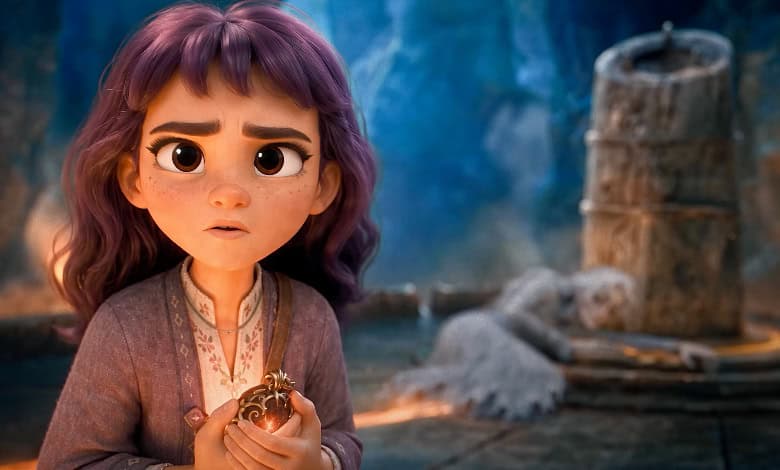
Lookout, Disney. A former employer is ready to tell his stories his way.
Creator Josh Daws is flexing the power of A.I. to create a series of satirical “Mary Sue” shorts. The narrative through line? Young Mary Sue is exactly who she sounds like, but through her adventures she realizes the folly of her woke ways.
Episode 1: Mary Sue Doesn’t Need Training pic.twitter.com/MnIzGgVy4u
— Josh Daws (@JoshDaws) July 14, 2026
It’s a thread that Hollywood, Inc. would never consider, let alone turn into a series of animated shorts. Daws has a point to make with the growing saga.
Two, actually.
He hopes to burst the woke bubble through storytelling, using fanciful settings to share his worldview. And he’s flexing the power of obtainable A.I. software to challenge the entertainment status quo.
Daws’ latest installment of “The Adventures of Mary Sue” showcases his growing confidence with the medium.
Episode 4: Mary Sue Thinks the Villain Is Misunderstood
Produced by @capcutapp using Seedance 2.5 https://t.co/XWfMsvcSrW pic.twitter.com/5EJFer82UF
— Josh Daws (@JoshDaws) August 25, 2026
Mary Sue and friends confront an evil sorceress who has an ace up her wicked sleeve. Call it Moral Relativism.
Daws’ quest is far from perfect. A Hollywood version of this short would feature more animated expressions, better music and other flourishes that come with boundless resources.
He’s still scaring all of the right people.
Then, again, the rise of A.I. should scare everyone, even those who never watched the “Terminator” series. Jobs will be lost and never come back. Relationships may be threatened on many levels.
Teens will be seduced by A.I. chatbots, confiding in them rather than parents or loved ones. And Hollywood will never be the same once A.I. is embraced on a studio level.
Many artists, and more than a few writers, will watch their livelihoods get gobbled up by the technology.
That seems inevitable and horrifying. And the genie is out of the bottle with no plan to go back in.
Earlier this month, a Chinese A.I. film turned a massive profit despite its clumsy appearance.
JUST IN: Homemade Chinese animated film “Niu Lai” surpasses $4 million at the box office on a reported budget of $200. pic.twitter.com/VFgVcOFDOb
— Polymarket (@Polymarket) August 20, 2026
Niu Lai was released on August 5 in a limited number of Chinese theaters, receiving approval from the Communist Party censorship offices presumably due to its lack of political or otherwise objectionable content. It made $995 at the box office on its first day – already representing a profit for the low-budget film – but did not truly take off until its few viewers began sharing footage of the film on Chinese regime-controlled social media. The poorly shaped characters, highly pixelated scenery, and the slightly disturbing quality of the characters’ eyes became viral hits, fueling demand nationwide for more movie theaters to carry it.
This is only the beginning.
Daws has a modest X following – just shy of 40K followers. His latest “Mary Sue” clip generated 200K views on his main post in just one day, but subsequent shares likely magnified its reach significantly.
The positive side to A.I.’s stunning rise? Storytellers who might never have had the resources or connections to share their imaginations will be able to do just that.
Daws is just one example.
More will follow. Some will be crude and infantile, much like the aforementioned Chinese film. Others will prove far more sophisticated and challenging. Audiences will have to sort out the difference.
Hollywood studios will have to improve their output to compete with the latter.
A hopeful part of this evolution? Stories that would never get a fair hearing in any studio, large or small, will suddenly get the chance to flower.
Would a Disney or Universal attempt a story like “The Adventures of Mary Sue?” Not a chance.
Anything anyone produces with AI is still subject to Sturgeon’s Law. Sturgeon’s Law states that 95% of anything made is crap.
Take a quick look at the YouTube Sci-Fi channels/Fan Animation and Warhammer 40K shorts!
Some are better than ANYTHING Hollywood has turned out in Decades….
AI stinks.
Hollywood doesn’t have “integrity” and the “best actors” are not necessarily the ones picked for jobs but rather the Actors who scream Anti Trump filth the loudest. We now see that movies won’t be considered for Awards if they don’t have the requisite number of homosexuals, transgenders and minorities in it EVEN IF HISTORICALLY THEY WOULDN’T HAVE BEEN THOSE PEOPLE. So, if actors get REPLACED BY AI , list me as “unconcerned”.
Disgruntled Disney Employee sets out to challenge them?
I don’t think Disney has anything >coughcough!cough!cough<
Original post brought up Don Bluth and Katzenberg between the coughs… didn’t survive the HTML. My bad