
Where Are All the Thanksgiving Movies?
Major U.S. holiday gets little love at the cineplex for several key reasons
With Halloween behind us, Christmas is already on everybody’s minds.
Yuletide tunes are on the radio, and Black Friday advertisements are flooding mailboxes.
For Americans, Thanksgiving is the next major holiday. While the day is often met by controversy and culture wars, it remains one of the most popular holidays on the secular calendar. According to Pew Research, 91 percent of Americans celebrate it, and 74 percent do so with other people.
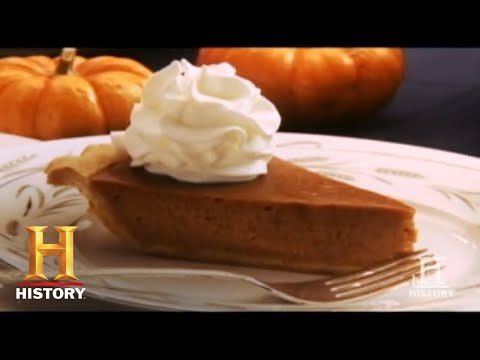
And Americans DO celebrate it hard. Each year, 40 million frozen turkeys are sold, 80 million pounds of cranberries are purchased, and 40 percent of the year’s total sales of Campbell’s Mushroom Soup will happen in just a few weeks.
The annual Thanksgiving football games are also one of the year’s biggest television draws. Last year’s battle between the Chicago Bears and Detroit Lions netted 37.5 million viewers, more than 11 percent of the country’s total population.
Despite the general sentiment that Christmas and Black Friday have overwhelmed Thanksgiving’s place in the culture, it retains a coveted slot in American life. The holiday even has a fanbase of haters who show up to the family dinner table to remind loved ones that their turkey consumption honors Native American genocide.
That cultural omniscience does raise an interesting question: Where are all the Thanksgiving movies?

It’s surprisingly hard to find many films that qualify as a “Thanksgiving movie.” Despite the holidays being absolutely jammed with Christmas, New Year’s, Valentine’s and Halloween examples, most people probably can’t count examples on more than one hand.
I had to do some serious Google searching to make a comprehensive list.
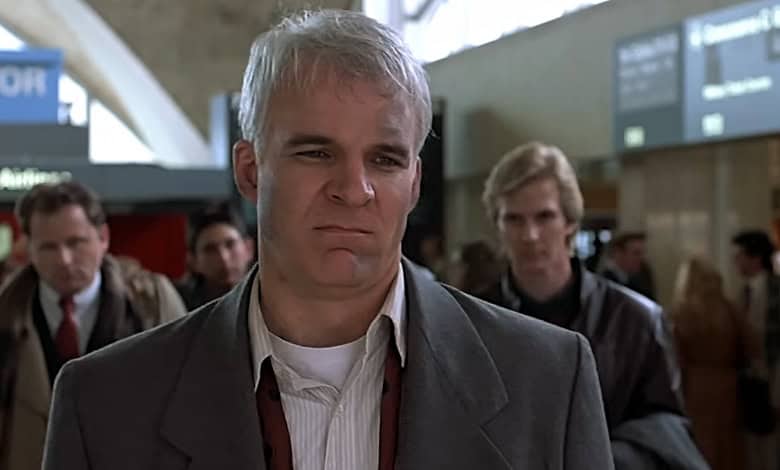
“Planes, Trains and Automobiles” (pictured above) is the most obvious example, with comedy films like “Tower Heist,” “Son in Law,” “Jack and Jill,” “Pieces of April,” “Hannah and Her Sisters,” “For Your Consideration,” “Grumpy Old Men” and “You’ve Got Mail” also being set on or around the holiday.
Martin Scorsese’s famous music documentary The Last Waltz famously takes place on Thanksgiving. It’s also an important plot detail in “The Blind Side.” The forgotten 2013 animated flick “Free Birds” follows turkeys attempting to escape from the holiday.
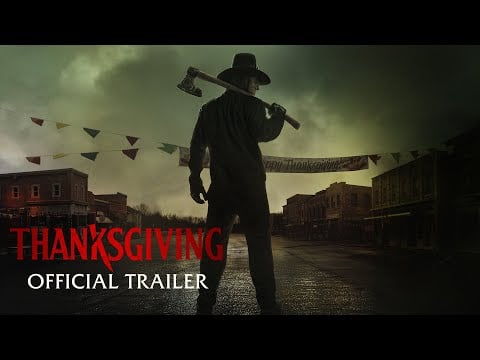
The first “Spider-Man” (2002) has one scene set at Thanksgiving. Maybe the most notable film is Eli Roth’s recent slasher flick “Thanksgiving,” which is both set on and satirizes the holiday’s excesses.
Even “A Charlie Brown Thanksgiving” is kind of a black sheep amongst Peanuts holiday specials, which says very little about the spirit of the holiday besides a perfunctory speech from Linus.
It mostly exists for gags about lawn chairs and popcorn.
There’s a massive lack of content in the Thanksgiving genre. If anything, Thanksgiving exists in films to force family dramas or a narrative excuse for people to come together at the same table.
On the cynical end, it’s satirized as a cynical consumer holiday.
There are a few reasons for the dearth of Thanksgiving movies, and they’re mostly financial in nature. As Casey Cipriani writes for Bustle, Thanksgiving sits in a precarious place in film distribution, amid one of the slowest box office months of the year and being an exclusively American holiday with little international appeal.
Any Thanksgiving film is going to have a small audience and limited ability to gross its budget at the box office. 8KPAX illustrates this point well, pointing out that the total gross of all Thanksgiving movies has been just $450 million, while Christmas movies have grossed billions.
As Cipriani further suggests, it’s a holiday that may also be difficult to dramatize:
“For one thing, it might not have the same positive spin on it that Christmas can conjure up. While the purpose of many Christmas-set films are to set aside differences and work towards peace or to turn from greedy misers into generous givers, the goodwill that stems from Thanksgiving is difficult to present on film. Sure, we’re supposed to give thanks; Thanksgiving isn’t entirely about stuffing your face and watching football. But how exactly does “giving thanks” play out on screen in a story that needs a beginning, middle, and an end?”
James Grebey at GQ argues that Thanksgiving lacks the rich vibes and symbolism that make Christmas movies so potent. It’s a day about visiting family, eating a meal, napping, and surviving a horrific commute home. That makes it awkward to center intellectual property on.
“Thanksgiving is largely relegated to a single day bookended by hellish travel. The “main character” of Thanksgiving gets slaughtered and eaten for dinner, and Pilgrims’ whitewashing of Native American genocide isn’t nearly as cute a story as Rudolph the Red-Nosed Reindeer or Frosty the Snowman.”
Sullivan Dickerson echoes this sentiment in an article for UMass Boston’s student newspaper, suggesting that the American public’s growing knowledge of Native American mistreatment has soured the central story of the holiday and painted the pilgrims in such a poor light that the holiday’s core mythology is poisoned, leaving a celebration with “no mascots, no plot, no traditions and no fun” that can be made into a movie.
All this commentary paints a sad portrait of a holiday that’s focused on gratitude. It feeds into a sad cycle where holidays about consumption and consumer spending are lauded and uncontroversial, whereas holidays that celebrate contemplation and reflection are ignored.
It annually becomes yet another depressing culture war conversation, where Instagram stars can brag about going “no contact” with their families. It divides us instead of bringing us together.
Thankfully, there is something positive worth pointing to! As Substack writer Michael Messineo points out, there is actually a rich vein of Thanksgiving entertainment outside of theaters.
Just turn on the TV.
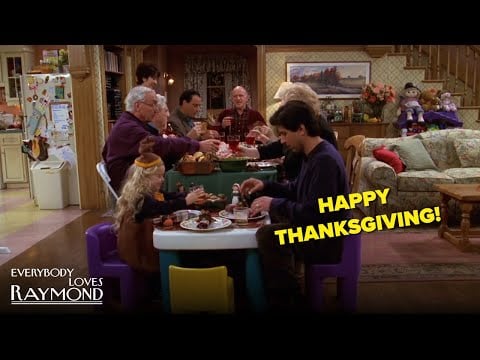
While he rightly points out that Thanksgiving films are “scraping the bottom of the barrel,” Thanksgiving TV specials have a unique advantage in that they can draw on existing veins of familiar characters, using the comfort we associate with them to create stories that draw strongly upon the holiday.
“We spend time with TV characters. Lots of episodes, over many years, and our relationship with them and their relationships with each other are different than the relationships we watch evolve in a two-hour movie. It’s hard to build up the emotional connection needed for a payoff in a Thanksgiving movie. I just never care all that much. Whereas a holiday TV show is a reward and a payoff for the time we have spent with these characters….
“Thanksgiving is a TV holiday because it’s a pretty simple, no-frills day that sometimes involves uncomfortable get-togethers with people you know really well and where things can go terribly wrong—which is the premise of most of the TV shows ever made.”
While I definitely think there is a hole to be filled with a great Thanksgiving movie—maybe even one that bucks trends and celebrates the first Thanksgiving as something more than mere genocide —there is something to be said about recovering something that’s already there. There are already hundreds of great Thanksgiving TV specials, and maybe that’s the right vibe for now.
If you liked this reflection on holiday specials, check out my new book IS DIE HARD A CHRISTMAS MOVIE?: AND OTHER QUESTIONS ABOUT THE TRUE MEANING OF CHRISTMAS FILMS! It’s a cozy holiday read that examines the genre of Christmas movies through the lenses of film, history, theology and economics to discover why Christmas movies might be the strangest genre in filmmaking!
I love the Seinfeld Thanksgiving episode that had Jon Voight in literal walk through cameo.
“Home for the Holidays”, a Jody Foster directed film starring Holly Hunter is specifically a Thanksgiving Day movie. I only saw it when it first made it to cable, been meaning to look it up for this year. As far as the anti-Thanksgiving crowd, they act as if the native Americans who lived here were all peaceful and got along fine until the evil white man arrived. The fact is that they were violent tribes who had many battles, massacres, and atrocities against one another.
We celebrate Thanksgiving as a less than perfect idea of trying to live with others peacefully. This revisionist notion that we should be ashamed of creating our great country just sickens me. Thanksgiving, along with the Fourth of July, are two very specific national holidays that are meant to bring us together, and it’s sad that filmmakers avoid it like the plague.
I can’t believe Thankskilling isn’t mentioned. I don’t want to spoil anything, so I’ll just say that the turkey may or may not be the killer.
Every year leading up to Thanksgiving we watch our favorite TV episodes from shows like The Middle and Everybody Loves Raymond. Most of those episodes are great. Other shows have one great episode like Cheers (Thanksgiving Orphans), WKRP in Cincinnati (Turkeys Away), Barney Miller (Thanksgiving Story), and Night Court (The Last Temptation of Mac).
Hey don’t forget Dutch (1991) with Ed Oneil!
I would also add the Denzel Washington movie Antwone Fisher. It’s a powerful story about the importance of family and it ends with an incredibly touching Thanksgiving meal scene.
I honestly cannot believe you have forgotten a major one – Dutch / Driving Me Crazy (1991). It’s a John Hughes film and seriously underappreciated.
Unlike other John Hughes holiday films (cf. Home Alone) it explores class issues and struggles at greater length:
Dutch: How do you know I’m working-class?
Doyle: From your cheap shoes, to your ridiculous hairstyle, to your crude vocabulary, to my mother’s taste in men, you scream it.
Dutch: And is working-class bad.
Doyle: If you want to get into a political discussion with me, I’ll shred you. No, it’s not bad. A solid economy needs hand workers.
It also dives into the cultural meaning of Thanksgiving: family, sharing, connection, celebration.
Whereas Planes, Trains, and Automobiles leans heavily on inter-personal and physical humour, Dutch’s physicality and humour is heavy on pathos but ultimately delivers the signature Hughes’ emotional pay-off.
I watch it every Thanksgiving and often wonder why it wasn’t a hit like other John Hughes films. It may have been over shadowed by Home Alone (released the year before) and the lack of easy humour.
At this point, I’d be happy to to hear the word “Christmas” used in just one flippin’ TV commercial. Everything’s all “holiday holiday holiday holiday holiday holiday.”
YES!!! Thank you Phil for pointing out MSM’s elephant in the room. They scramble for the Christmas season’s ratings, but pucker even at the word Christmas. TBH, there are not many “holiday’ specials that are worth watching. Good luck trying to find Christmas classics like: It’s a Wonderful Life, A Christmas Carol, or A Christmas Story, to name but a few. Feel good movies that the majority of families can all watch during Christmas time.