
The A.I. revolution is upon us, and filmmakers have taken the baton from James Cameron.
Someone had to.
“Mercy,” an A.I. infused thriller, is no “Terminator 2: Judgment Day,” the ultimate warning about our computer overlords.
It still makes us think about where artificial intelligence will lead us.
“Mercy” also reminds us that while Chris Pratt has charisma to spare, even he can’t camouflage some of the most manipulative storytelling this side of daytime soaps.

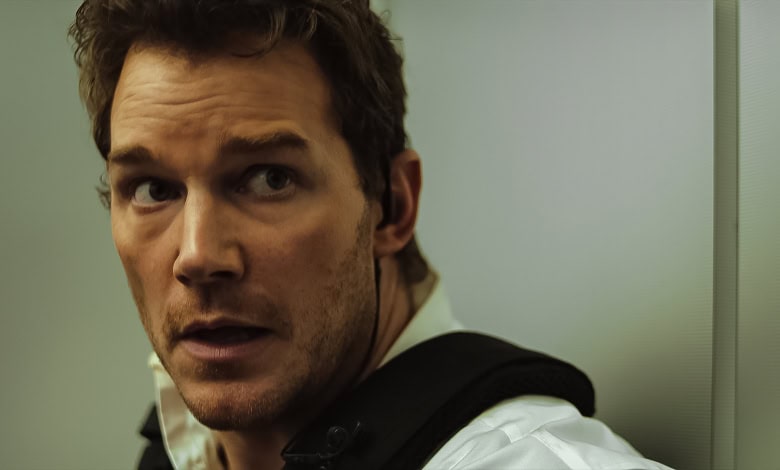
Pratt stars as Chris Raven (dude, what a name, right?), a detective accused of murdering his wife. The story is set in a near future when A.I. bots lord over “Mercy Court,” where the accused have 90 minutes to prove their innocence or the chair they’re seated in goes electric.
Not Bob Dylan style, mind you.
Chris must mount a defense, and fast, while the A.I. judge (Rebecca Ferguson) lets him access all the media he might need to do so. Private videos. Public camera feeds. Data files.
Nothing is off limits. Nothing is sacred. It’s a sly way of commenting on how much personal freedom we’re giving up in the digital age. It also assumes people are constantly filming themselves like a “Found Footage” competition that never ends.
It’s one of countless plot devices that keep “Mercy” afloat. Either you buy into the concept or you wait in the lobby until the film wraps. There’s no Plan B.
The case against Chris looks airtight. He’s an alcoholic with anger management issues, and a Ring doorbell-style video has him entering the family’s home a short time before Chris’ wife (Annabelle Wallis) was murdered.
Might as well crank up the chair and dispense with that 90-minute period, right?
But wait! Chris is a cop, after all, and he scrambles to find who the “real” killer is. Unless he blacked out and doesn’t remember committing the heinous act.
“Mercy’s” premise couldn’t be more fascinating or timely. How much should we trust A.I. intruding into our lives? What facts can be trusted, and which ones need context to fully explain? Can we outsource crime fighting to robots, especially if it greatly enhances our safety (as the movie insists in the opening moments)?
And if you’re gonna cast Pratt, you better make sure he does more than writhe in a chair for 100 or so minutes.
View this post on Instagram
“Mercy” isn’t dull despite the static setting. The interrogation room doubles as a holodeck of sorts, allowing director Timur Bekmambetov (“Wanted,” “Night Watch”) to flood the screen with digital imagery tied to the case.
That can be fascinating at times, but in other sequences it might make audiences laugh out loud. It should.
The more Chris digs into his defense, the wackier the story becomes. The third act turns the dial to 11 before snapping it off entirely. We didn’t need “Mercy” to take such a drastic turn, but Bekmambetov is determined to expand the narrative beyond all sense of reason.
Ferguson is a cool, chilling presence as our cyber-judge, but the film allows her to grow in the grand Data/”Star Trek” tradition. The results are wobbly, at best, but it does make us consider how ChatGPT and its ilk process information and, in a frightening fashion, adapt to new realities.
Remember that story of an A.I. bot that was told to shut down … but didn’t? “Mercy” thrives when we flash back to headlines like that.
For all its myriad flaws, “Mercy” keeps flirting with issues that overlap with our reality. That, and a narrative that never slows down, make it oddly irresistible.
Silly. Corny. Predictable. Outrageous. But irresistible.
HiT or Miss: “Mercy” is sillier than most sci-fi thrillers, but a determined Chris Pratt and themes that overlap with our digital age make it all too chilling.