
Did Elvis Costello Go Woke Over ‘Oliver’s Army’ Slur?
Angry young man appears to placate mob with shocking lyrical change
Elvis Costello once uttered a terrible word, twice, during a drunken exchange that might have gotten him canceled today.
Perhaps permanently.
The singer-songwriter slammed American music in general and, more specifically, U.S.-based superstars Ray Charles and James Brown with the dreaded “n-word,” according to a 2010 New Yorker profile of the rock icon. As the story goes, Costello got knocked to the floor in short order, and the incident allegedly hurt his rising star status. (Costello publicly apologized for the outburst)
Ask Morgan Wallen how that feels.
More than 40 years later, Costello is still a vibrant touring act, but he recently changed the words to one of his iconic songs – “Oliver’s Army.”
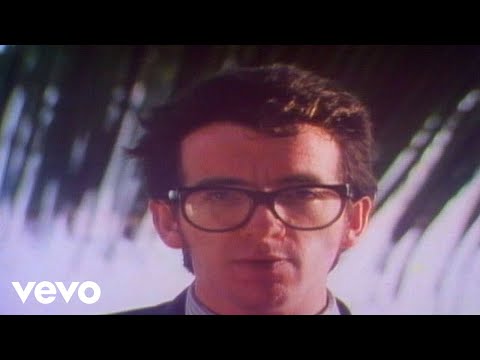
Now, the singer is swearing – literally – that he didn’t go woke in the process. Costello nixed the song from his concert lineup in 2022, but he wasn’t forthcoming as to the reason why.
RELATED: ELVIS COSTELLO SLAMS TRUMP, FALLS OUT OF TUNE
“Oliver’s Army” is back, but it’s had a minor facelift.
The old lyric: “Only takes one itchy trigger, One more widow, one less white n-word”
The new lyric: Only takes one itchy trigger, One more widow, one less pallbearer”
(NOTE: The closed captioning on the YouTube version of the song includes the word in question)
The song in question finds Costello weighing in on “The Troubles,” the ongoing Northern Ireland feud that left hundreds dead and many more injured.
The line in question, according to LouderSound.com, “is a reference to a slur used against Irish Catholics and to racist attitudes which underpinned British military campaigns across the world in centuries past, and which permeates sections of the British Army to this day.”
The musician shared his explanation for the lyric on a 2002 reissue of “Armed Forces,” the album featuring the track.
“I made my first trip to Belfast in 1978 and saw mere boys walking around in battle dress with automatic weapons. They were no longer just on the evening news. These snapshot experiences exploded into visions of mercenaries and imperial armies around the world. The song was based on the premise ‘they always get a working class boy to do the killing’.”
The slur doesn’t connect to what we typically imagine when that reprehensible term comes to mind. Still, Costello changed it anyway.
His explanation will sound to some like an excuse.
“I no longer use words that go off like alarm clocks, because indignation about that word stops people hearing what the song is about,” he explains.”That is my position. People went, ‘That’s woke.’ Well, go f*** yourself.”
The Rolling Stones faced a similar issue in recent years. The band favorite “Brown Sugar” got the heave-ho in 2021 for allegedly demeaning black women and slavery references.
Guitarist Keith Richards defended the song but didn’t fight to keep it on the band’s live playlist, apparently.
“I’m trying to figure out with the sisters quite where the beef is. Didn’t they understand this was a song about the horrors of slavery? But they’re trying to bury it. At the moment I don’t want to get into conflicts with all of this s***,” he said. “But I’m hoping that we’ll be able to resurrect the babe in her glory somewhere along the track.”
Classic rockers once trashed hotel rooms and committed other unspeakable acts. Now, they dare not offend fans both old and new.
Did Costello have a moment of woke? Or is his anger at the suggestion justified?
This is kind of old news, I heard he changed it years ago, then quit performing it altogether, then brough ti back recently with pallbearer line
I liked Oliver’s Army because it was a catchy tune. I had no idea what the lyrics were about. Just figured it was another one of Costello’s “message songs.” Thanks for the explanation.
As to the use of “the word”, it’s used so often in rap lyrics that I’m numb to it. Not to say I listen to that garbage, but it’s hard not to when the people next to me at the red light play it so loud that it vibrates by rear-view mirror.
I do find it annoying when people say “we can use the word but you can’t.”
If it’s so awful, you should stop using it, too.
If the “n” word is so offensive then why not make it a CRIME to utter it? OH, then you’d have to arrest most black people and certainly have to ban (c)rap “music”! What the REAL offense is – a WHITE person says it! And for a group to be cancelled because they “demean black women”? Have you ever listened to any (c)rap? It’s either about killing the PO leese or something about “ho’s” and “b itches”! Most of what I’ve been subjected to or read articles condemning the “lyrics” are simply TRASH and demean women as nothing other than another article! As hard as the DEMOcrats have worked to destroy the black family, it wouldn’t surprise me to find that THEY invented (c)rap to further destroy black families!