
How Tom Stoppard Stared Down Cancel Culture
Late literary giant defended Thatcher, spoke out for free speech in woke era
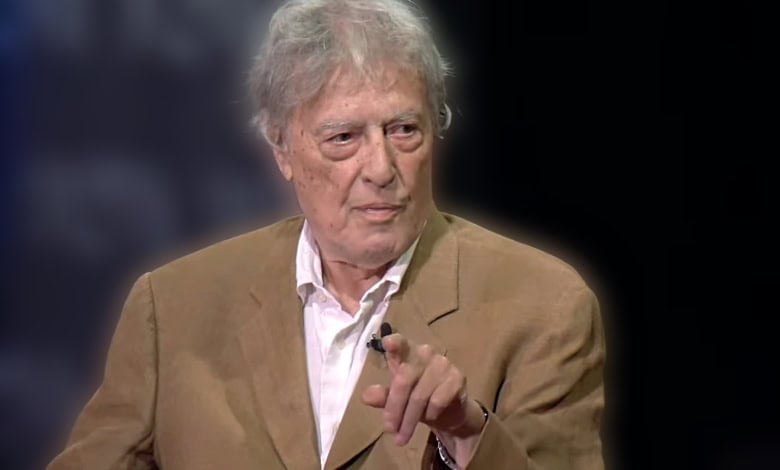
The death of Tom Stoppard impacted far more than just the stage, although his theatrical work was enough to forge a considerable legacy.
The celebrated playwright behind “Rosencrantz and Guildenstern Are Dead,” “Arcadia” and “Travesties” won an Oscar for co-writing 1998’s “Shakespeare in Love.” He also helped Steven Spielberg polish scripts for “Schindler’s List” and the “Indiana Jones” franchise, among others.

He even shaped a critical sequence in “Star Wars: Revenge of the Sith,” the best of the saga’s prequel films.
Stoppard’s voluminous work stretched to TV and radio, but his ability to withstand an early Cancel Culture blow and, later, defend free speech shouldn’t be forgotten.
Sir Tom’s support for Prime Minister Margaret Thatcher in the 1980s caused a kerfuffle in artistic circles. Stoppard later said he wasn’t “canceled” in a modern sense, but his political leanings didn’t help his career.
In some circles, they held him back.
In a recently released biography of Stoppard, the biographer Hermione Lee recounts how the former artistic director of the Royal Court Theatre, seen as the home of radical drama, defined its “ethos and policy [as] never put on a play by Tom Stoppard.”
For years, his politics leaned to the Right, but he didn’t see himself as an activist. Nor did he take sides in his work, preferring to pen different arguments to see who brought the better ideas to the table.
Stoppard admitted to embracing elements of socialism in his later years, either a product of genuine reflection or an attempt to stave off the artistic Left.
Given his bold attacks on woke culture, it’s likely the former.
The five-time Tony winner spent his later years praising Great Britain and free speech. He spoke out against the rise of woke restriction, defended J.K. Rowling from her extreme cancellation and regretted the rise of the term “hate speech.”
In 2021, during the height of the woke movement, Stoppard said Cancel Culture “erodes free speech.” Two years later, he addressed the woke mindset anew, including the need for so-called “trigger warnings.”
“People are now deemed to be much more needful of protection from any kind of a rebuke, reproach, criticism,” he says. “There’s a great sensitivity about how you can talk about anything which might obscurely offend part of the readership.”
He also wanted his fellow artists to express themselves sans restrictions.
“When I hear somebody say something which I think is wrong, the last thing on my mind is that, ‘This shouldn’t be allowed, nobody should be allowed to write this’. I just think, ‘He’s wrong, and I hope somebody is telling him’,” he says, and adds: “The way I was brought up was that you can say anything you like, and then anybody can tell you are talking nonsense, and to speak better.”
Credit common sense, an artist’s mindset or the memories of youth. Stoppard grew up in Czechoslovakia, but his family fled the country during World War II following Germany’s invasion.